Most homeowners who attempt DIY pest control are doing something — buying a spray at the hardware store, laying a few traps, sprinkling powder along the baseboards. The effort is real. The problem is that many common approaches don't just fail to work; they actively make the infestation harder to resolve. Pests scatter, populations split, and bait aversion develops.
The good news is that most of these mistakes are easy to stop once you know what you're looking for. Here are nine of the most common ones, and the straightforward corrections that actually move the needle.
Mistake 1: Overspraying baseboards with repellent insecticide
This is the single most common DIY error we see. Homeowners soak every baseboard in the house with a repellent pyrethroid spray, which pushes cockroaches, ants, and silverfish into the walls and deeper into the structure rather than killing them. You stop seeing bugs for a few days and think it worked — until they re-emerge, often in new rooms.
Repellent sprays have a place in exterior perimeter defense, but inside the home, targeted non-repellent treatments and bait placement are almost always more effective for most crawling insects.
Mistake 2: Using bait and spray in the same area
Gel baits for cockroaches and ants work by allowing pests to carry a slow-acting toxicant back to the colony. If you spray a repellent or contact-kill insecticide in the same area, you contaminate the bait, repel the insects before they can consume it, and kill foragers before they can share the toxicant with nestmates. The bait becomes useless.
Choose one approach for a given area. If you're using gel bait, keep sprays away from those zones for the duration of the treatment cycle — typically 2 to 4 weeks.
Bait placement matters as much as bait choice
Small pea-sized placements in 10–15 locations are far more effective than large globs in two or three spots. Cockroaches and ants forage along edges and corners — place bait where you see activity, not where it's convenient for you.
Mistake 3: Ignoring the entry points
Killing the pests you can see without sealing how they got in is a losing proposition. Mice, in particular, can re-enter through gaps as small as a dime. You can empty every trap in the house and have a new population inside within weeks if the entry points remain open.
Exclusion — caulking gaps around pipes, screening vents, sealing foundation cracks — is not glamorous, but it's the single most durable pest control investment a homeowner can make. Treat first, then exclude. Or exclude first. Either order works. Skipping it entirely does not.
Mistake 4: Using snap traps in the wrong locations
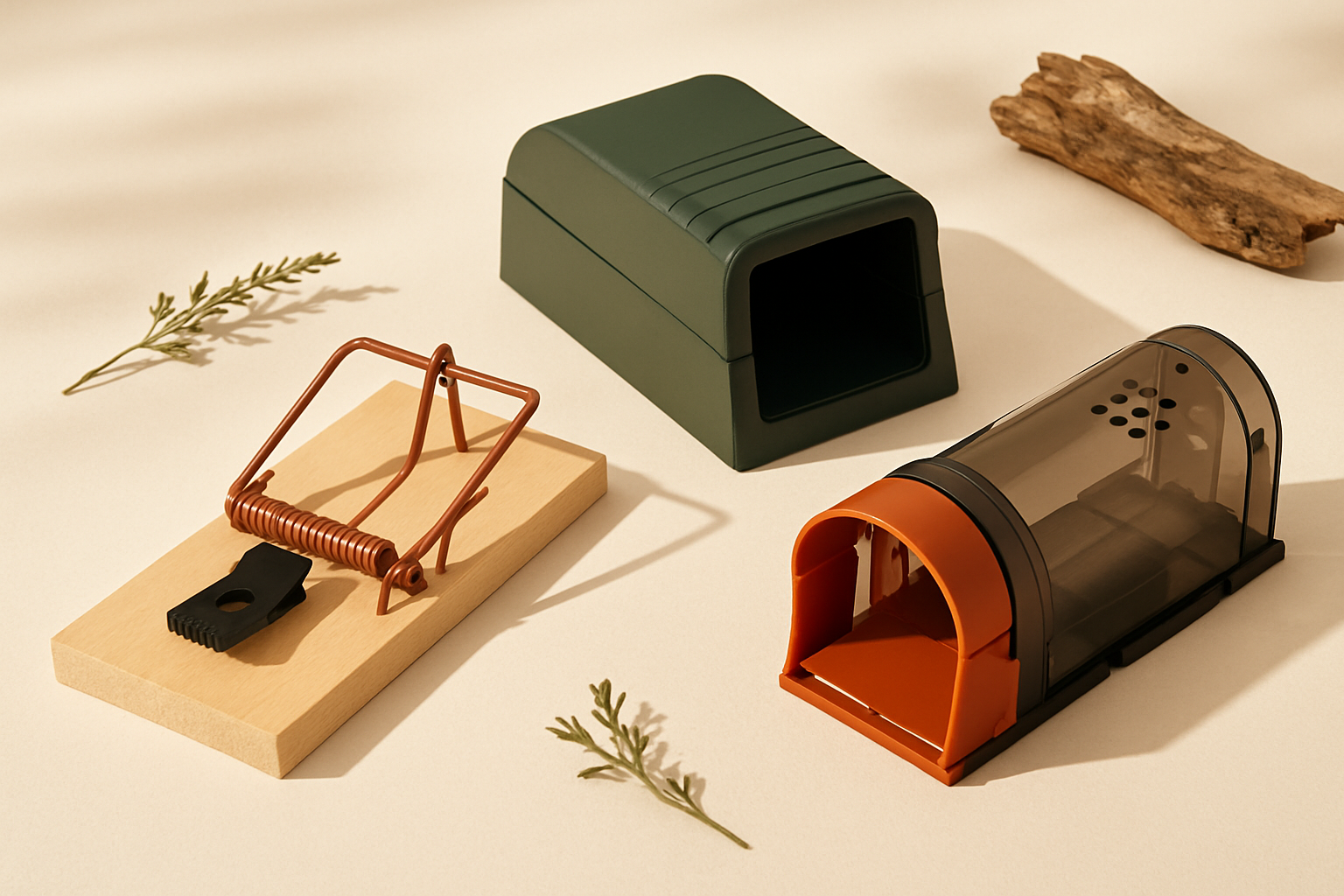
Rodents are neophobic — they're wary of new objects in their environment and tend to travel along walls, not across open floor. Snap traps placed in the middle of a room rarely catch anything. Traps placed perpendicular to the wall, with the trigger end touching the baseboard, catch far more consistently.
Also: wearing gloves when handling and setting traps reduces human scent transfer. This is especially relevant for the first placement in a new location.
Mistake 5: Buying ultrasonic repellers and doing nothing else
Ultrasonic repellers are one of the most heavily marketed categories in pest control. The evidence that they produce meaningful, lasting results against rodents or insects in typical home conditions is thin. Some studies show a short-term startle response that fades within days as animals habituate.
We test these devices — see our ultrasonic repeller reviews — and a small number show some effect in specific, limited scenarios. But using an ultrasonic device as your primary or sole response to an active infestation will almost certainly disappoint you. Use them as a possible supplement to a real control program, not as a substitute for one.
Expert perspective from Priya Ramanathan, BCE
"The most effective DIY programs I've seen always combine three things: a mechanical or chemical control method appropriate to the pest, sanitation that removes harborage and food sources, and some form of exclusion to stop re-entry. Any one of those three alone is usually insufficient. All three together often resolves a moderate infestation without a professional call."
Mistake 6: Neglecting sanitation
Pest control products can reduce a population, but if the conditions that attracted pests in the first place remain unchanged, you're managing a symptom rather than the problem. Cockroaches thrive on grease residue, cardboard clutter, and moisture. Rodents need harborage and a food source. Ants are almost always following a food or moisture trail.
Before you treat, remove clutter, clean behind appliances, fix dripping faucets, and store food in sealed containers. These steps are free and significantly improve the odds that your control product works.
Mistake 7: Applying pesticides in excess of label directions
The pesticide label is a federal legal document. "More is better" is not a philosophy that applies here. Applying more product than the label directs doesn't kill pests faster or more thoroughly — it increases your family's and pets' exposure, increases residue contamination, and in some cases triggers avoidance behavior in insects that makes subsequent treatments less effective.
Read the label. Follow the dilution rate. Reapply on the schedule the label recommends, not when you feel like it.
Mistake 8: Treating only where you see activity
Visible pest activity is the tip of the iceberg. For every cockroach you see during the day, there are many more harboring in dark, warm, moist areas — behind the refrigerator motor, inside wall voids, under the sink. For every mouse you hear at night, there may be a colony in the wall or attic.
Effective treatment maps the full extent of the infestation, not just the visible edge of it. Use glue boards and monitoring stations to identify activity zones before treating. Treat harborage areas even if you haven't seen pests there directly.
Mistake 9: Giving up too soon — or waiting too long
DIY pest control has a timing problem on both ends. Some homeowners abandon a treatment after two days because they're still seeing bugs, not realizing that baits often take 1–3 weeks to collapse a colony. Others ignore early signs — a single mouse dropping, a few ants in spring — until a minor problem becomes a major one.
| Pest | Realistic DIY timeline | When to call a professional |
|---|---|---|
| Cockroaches (German) | 3–6 weeks with gel bait + sanitation | Active infestation visible in daytime; multiple rooms affected |
| Mice | 1–3 weeks with trapping + exclusion | Evidence in multiple rooms; re-entry after exclusion work |
| Ants (trailing) | 1–2 weeks with bait along trails | Carpenter ants with frass or structural damage |
| Termites | Not recommended without professional inspection first | Any confirmed or suspected activity |
The bottom line
Most DIY pest control failures come down to a handful of repeatable errors: repelling instead of killing, contaminating bait with spray, skipping exclusion, and not giving treatments enough time to work. None of these are complicated to fix. The pest control products available to homeowners today are genuinely effective — when applied correctly, in the right places, with a little patience.
If you're not seeing results after following a proper protocol for the full recommended period, that's the time to bring in a professional — not because DIY doesn't work, but because some infestations have progressed beyond what a homeowner can reasonably manage alone.
See our pest control gear rankings
We've tested traps, sprayers, bait stations, and monitoring systems so you can choose the right tool for the job.
Browse Reviews→